
235,715
Delivered orders

Find out how nursing tasks help students get ready for the exams, improve their critical thinking, and build their confidence for the NCLEX question practice.
ursing tasks are meant to help students learn more than just the basics. They have students review patient cases,
rogramming assignments are the tasks and projects which are assigned to the students. These assignments focus on the
N
ursing tasks are meant to help
apply theoretical frameworks, interpret clinical data, and explain why nurse treatments are needed. This means using evidence, considering each patient's needs, and putting safety first when making decisions. Students gradually learn to think as they practice NCLEX questions by repeating similar tasks.
students learn more than just the basics. They have students review patient cases, apply theoretical frameworks, interpret clinical data, and explain why nurse treatments are needed. This means using evidence, considering each patient's needs, and putting safety first when making decisions. Students gradually learn to think as they practice NCLEX questions by repeating similar tasks.
Nursing assignments also teach you about the professional nursing language, ethics issues, and guidelines for clinical paperwork. These topics are strongly rooted in the NCLEX, which tests professional responsibility and moral behaviour as well as factual knowledge. Keep scrolling to know the best NCLEX Preparation Plan.

Clinical Nursing assignments are very important on the NCLEX, especially with the new Next Generation NCLEX (NGN) question forms. Nursing jobs are one of the first places people learn how to do this. Case studies, best nursing student tips, care plans, and thoughtful writing prompt students to review patient details, determine what nurses should do first, and reflect on what happened. The thinking skills that the NCLEX question practice questions are meant to test are very similar to those in these exercises.
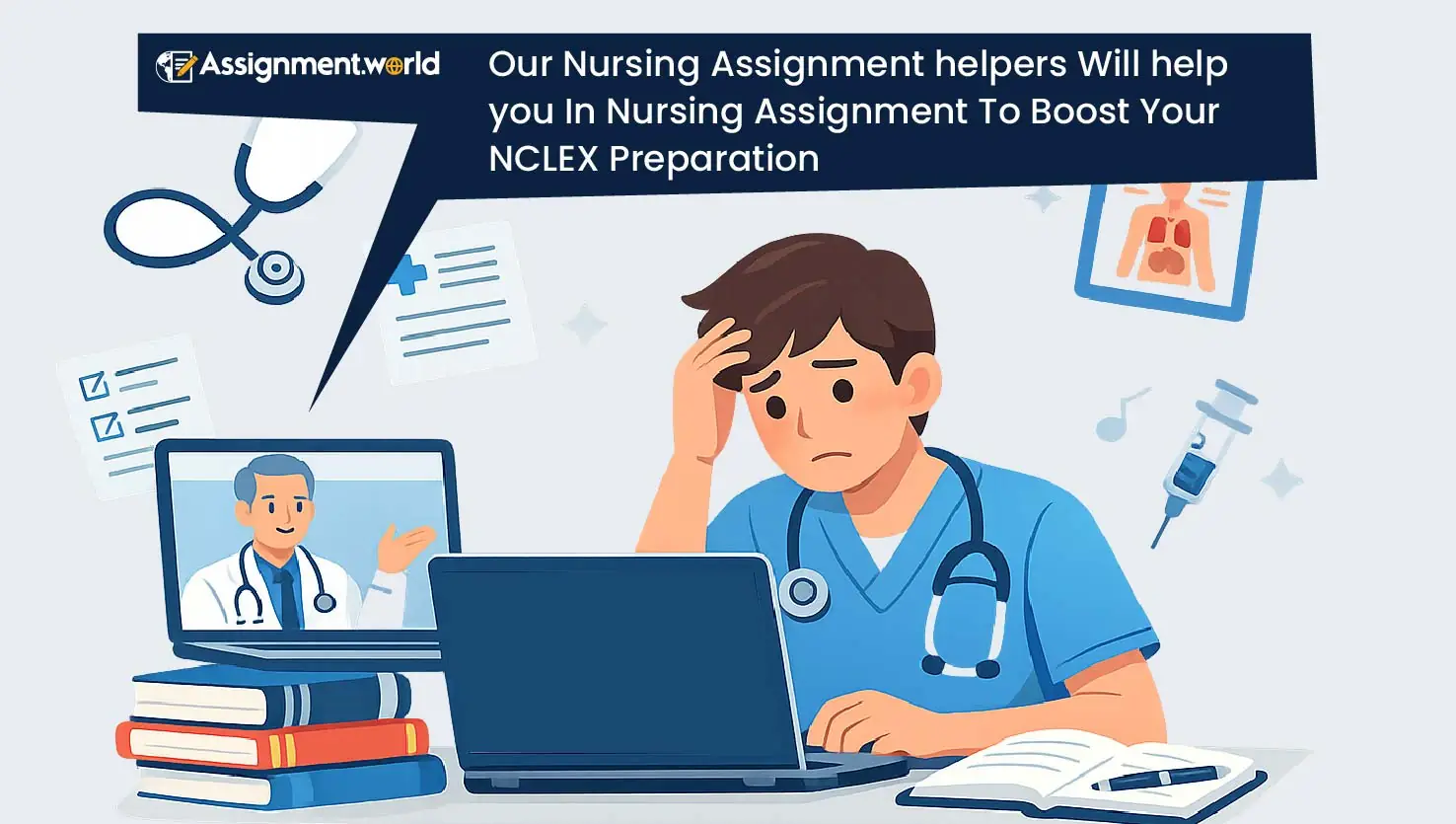
Students learn to distinguish between pressing and non-urgent patient needs through homework. They include NCLEX question practice review, delegation, and scheduling, all of which are important NCLEX skills. Delegation questions are also a way to test someone's understanding of leadership. The nurse remains responsible for the tasks assigned to others and must ensure proper follow-up. With enough nursing exam practice, students become more confident and less anxious in difficult test situations.
A lot of focus is put on evidence-based nursing exam practice in both classroom courses and the NCLEX, as it is a very important part of modern nursing. Clinical thinking grounded in evidence is something students learn to do through nursing assignments, and this is exactly what the NCLEX expects.
A big part of the NCLEX preparation plan and the NCLEX is patient safety and making ethical choices. This unified method ensures that classwork and test prep work together rather than being done separately. These reflective skills, nursing student tips, are great for NCLEX prep because they help students see how they think and adjust their methods accordingly.
Looking over finished homework can help you study for tests. Case studies, evidence-based actions, and summary ideas that closely align with nursing assignment help, subject areas are often found in assignments. Assignment ideas can also help students focus their NCLEX question practice.
Medical assignment help is more than just things you have to do for school; they are useful way to help you get ready for the NCLEX. The things students learn in school need to be repeated; students need to learn how to think critically and NCLEX question practice based on proof, building trust. All of these things help students prepare for the difficult licensing test.
At the start of a shift or during hiring changes, assignment questions focus on ensuring the right nurses are matched with the right patients. These questions are meant to see how much people know about patient severity, difficulty, and staff competence. Unlike delegate questions, projects are about planning, not assigning tasks. The staffing and leadership choices that need to be made in the real world are similar to the questions in this assignment.
The NCLEX Preparation Plan often concerns balancing work and patient safety. The right answer indicates that both the patient's needs and the staff's skills have been carefully considered. The test awards choices that avoid mistakes, lower risk, and encourage good care.
Patient security is an important issue in homework questions. Stable patients need regular care and have known outcomes. Unstable patients either show signs of getting worse or need to be assessed and treated frequently. The NCLEX expects nurses to refer patients with risky conditions to more skilled nurses.
Patients with similar symptoms but varying severity may appear in the assignment questions. Recent surgery, test results outside the norm, or new symptoms are some of the small differences that determine the order of assignments. You need to read carefully to spot these details. The test also looks at the consistency of care.
To get really good at task questions, sharing, and prioritisation, you need to practice NCLEX question practice them all the time. Going over the reasons for both the right and wrong answers helps you see how NCLEX thinking works. A lot of the time, knowing why something isn't wrong is better than knowing why something is right.
Reflection is another way people learn. A lot of the NCLEX Exam Tips, knowledge on the NCLEX isn't needed; it's there to test focus and reasoning. Identifying key details helps you get things right and avoid misunderstanding.
Be Clear About The Scope Of Your Practice: One of the worst things you can do when delegating is to give someone a job that is not within their legal area of practice. Always keep in mind that RNs can provide responsibilities to others, but they can't make decisions about nursing. LPNs and UAPs (Unlicensed Assistive Personnel) have specific duties. Before you give someone else a job, be sure you know what they can and can't do under the law.
Do what the Five Rights of Delegation Say to Do: Always use the Five Rights: the right task, the right situation, the right person, the right direction/communication, and the appropriate supervision/evaluation. The delegation may not be safe if even one part is absent.
Make Your Instructions Clear and Specific: Instructions that aren't clear might cause mistakes. When you delegate, be sure you offer precise, step-by-step instructions and specify what results should be reported right away. Good communication lowers risk and makes patients safer.
Keep An Oversight, Once You Delegate: Giving someone else a job doesn't mean you aren't responsible. The RN is still responsible for making sure the job was done well and for judging how well the patient did. To safely delegate, you need to supervise and follow up.
Success needs more than just memorising facts; it needs deep thought, the best NCLEX exam tips, careful study, and trust in your ability to reason clinically. By practising these question types a lot, thinking about their work, and making sure that their clinical work and school work are connected, nursing students can get really good at these kinds of questions.