
235,715
Delivered orders

Searching someone who can help with assignment help online? Hire our best assignment experts and enjoy the best grade.

niversity life is quite demanding, and there are many moments when you feel trapped and pressured without
rogramming assignments are the tasks and projects which are assigned to the students. These assignments focus on the
U
niversity life is quite demanding, and
knowing how to move forward. With short deadlines, complicated topics, language barriers, or multiple academic and personal responsibilities, knowing when to get help with assignments can make a huge difference to your academic performance and well-being.
there are many moments when you feel trapped and pressured without knowing how to move forward. With short deadlines, complicated topics, language barriers, or multiple academic and personal responsibilities, knowing when to get help with assignments can make a huge difference to your academic performance and well-being.
In today’s blog, we will answer your question: when is it ok to get help with assignments? Along with that, we will look at the ethical reasons you might need academic support for students and how to use it responsibly. This student assignment help guide will also explain when students should seek assignment help without crossing academic-integrity boundaries.

Before deciding if support is acceptable, it is important to understand what getting help actually includes. Assignment help for students does not automatically mean that you are cheating or taking any shortcuts. In most cases, it means you are seeking assistance, clarification, or structural support that improves your understanding rather than replacing your own effort.
When you get help with assignments, you might be asking questions, reviewing feedback, improving structure, or learning how to approach the topic correctly. Universities often encourage learning-focused support, especially when it helps you to develop new skills rather than avoid the learning process. The key factor is intent. If the support helps enhance your learning, it can be useful; however, if it replaces your learning, it becomes academically unsafe.
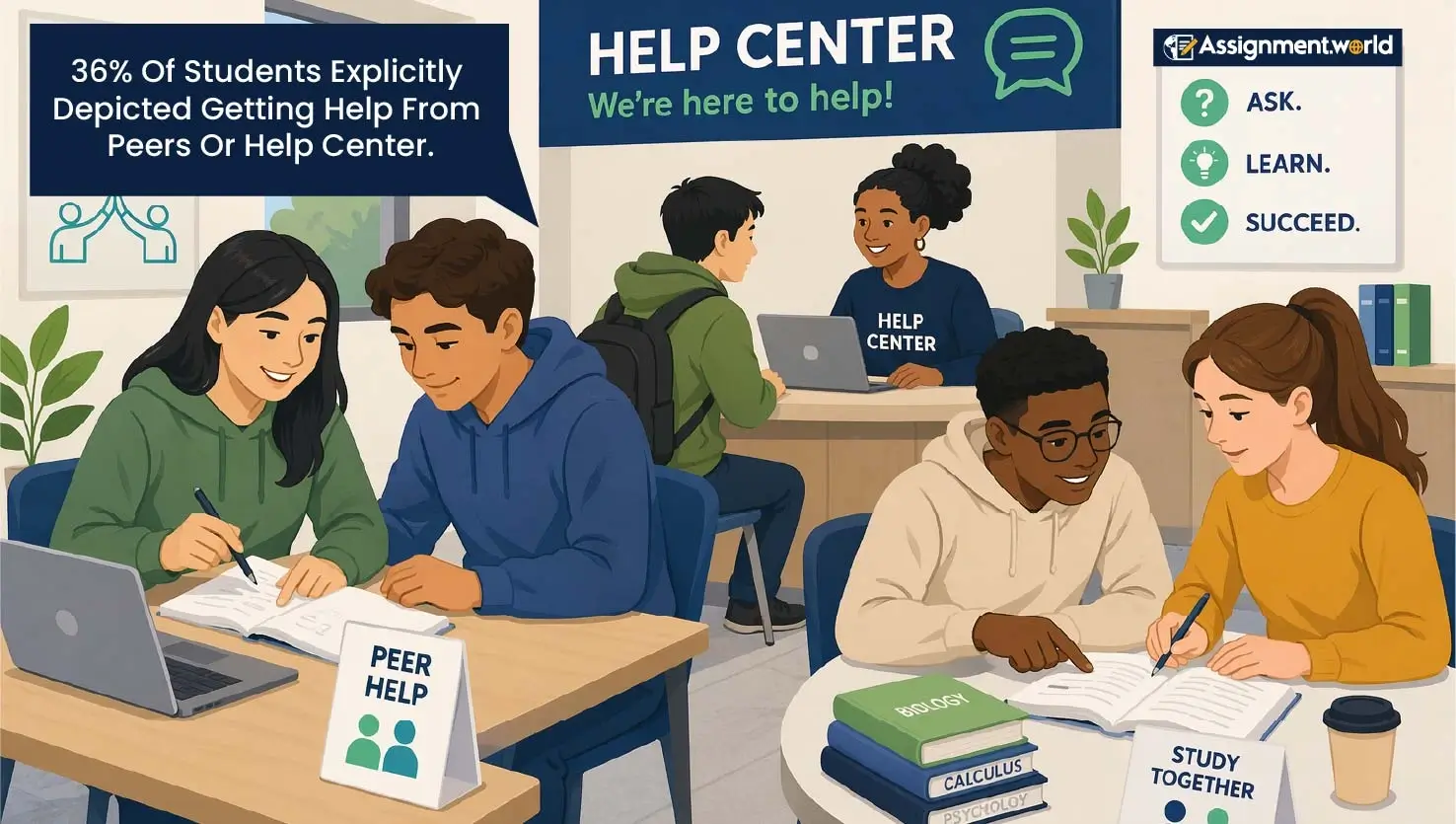
When is it ok to get help with assignments? There can be many times when the material simply does not click with you, no matter how hard you try. Complicated theories, unfamiliar terminology, or a weak foundation of knowledge can slow down your assignment progress significantly. This is one of the clear situations when students should seek assignment help support.
You are not expected to know everything instantly, but seeking clarification from experts, peers, or academic resources shows responsibility and not weakness. Getting academic support for students at this stage can prevent misunderstandings from compounding and help you to stay aligned with assessment expectations.
For example, an international student may understand the lecture but struggle to convert ideas into an academic essay. Another student may know the topic but feel unsure about citation style, evidence selection, or argument structure. In both cases, support can improve learning without replacing the student’s own work.
Deadlines often overlap, and juggling coursework, part-time jobs, and personal commitments can reduce the quality of your work. If you are in a hurry to just submit something on time, then learning suffers.
In these situations, learning how to get help with assignments ethically can protect both your grades and mental health. Time pressure does not justify plagiarism, but it does justify seeking organizational support, planning assistance, or academic help to manage your workload in a better way. Recognizing these warning signs is far better than submitting poor-quality work or missing deadlines altogether.
Safe support may include creating a study plan, checking your outline, reviewing feedback, proofreading your draft, or explaining the assignment brief. Unsafe support includes asking someone to write the full paper for direct submission.
When personal situations, illness, or unavoidable issues interfere with your ability to submit on time, requesting support through official channels is always better than panicking. Most universities have formal processes to request a deadline extension, and using them is completely acceptable.
You are expected to communicate proactively and provide evidence when required. Extensions are part of an academy support system and are designed to ensure fairness, not just to punish you for genuine difficulties. You should contact your professor, academic adviser, or student-support office as soon as possible. Waiting until after the deadline can limit your options and increase stress.
Universities offer a diverse range of built-in resources that many students underuse. Writing centers, study skill workshops, subject tutors, library sessions, or counseling services exist especially to help you succeed. Using academic support for students is encouraged and often reflected positively in long-term performance.
These services help you to understand the marking criteria, structure arguments, improve referencing, and interact with feedback effectively. Along with that, you get detailed information on the Impact of AI on University Assessment, through which you can avoid plagiarism and misuse of AI in your assignment. Support provided by universities is never unethical when it follows institutional guidelines and helps you produce your own work.
The line between acceptable help and academic misconduct is very clear, even when students feel confused about external support. Ethical help guides you, and unethical help replaces you. You cross the line when someone writes your assignment on your behalf.
On the other hand, student assignment help guides resources like feedback, proofreading within limits, clear concept explanations, and structural assistance usually fall within ethical boundaries. Whenever you get help with assignments, ask yourself whether the ideas are still yours. If they are, and if you can explain the work confidently, then you are in the right position.
Sometimes internal resources may not be enough for you. External support can be useful when used responsibly, ethically and transparently.
With assignment help services, you not just get assignments on time, but get much-needed help with concepts, structure, and methodology if you are stuck in these areas. If you are stuck in these areas. It is acceptable as a learning tool to improve your own writing skills for future assignments.
Therefore, the responsibility remains with you to rewrite, personalize, and fully understand the final submission. External help should support learning, not replace it.
Reliable assignment help for students should focus on guidance, editing, formatting, proofreading, referencing support, and model explanations. It should not promise guaranteed grades, direct submission papers, or shortcuts that violate university policy.
If you notice a pattern of missing deadlines, poor feedback, or low grades, then it's a signal, not a failure. Persistent difficulties suggest that your current approach is not working. This is where a student assignment help guide mindset helps. Opting for structured support early can help you to identify weaknesses, improve time management, and rebuild confidence before problems escalate. Ignoring the issue only makes recovery harder later.
For example, if you repeatedly lose marks for weak referencing, you may need citation support. If your feedback says your argument lacks clarity, you may need help with outlining and paragraph structure. If your work is always rushed, you may need planning support rather than last-minute writing help.
Ask yourself some simple questions:
Do I understand the task requirements clearly?
Am I capable of completing this without compromising quality?
Would getting help improve my understanding rather than replace my effort?
Can I explain the final submission in my own words?
Am I following my university’s academic-integrity rules?
If getting the best assignment help supports learning and ethical submission, it is usually acceptable. Making informed decisions protects both your grades and academic reputation.
This is why knowing when students should seek assignment help is important. The goal is not to avoid work, but to learn how to complete it more effectively.
Getting support is most useful when you stay actively involved. Do not simply accept corrections without understanding them. Ask why a sentence was changed, why a source is stronger, or why a structure works better. You can use support safely by:
Reading the assignment brief carefully
Creating your own outline first
Asking for feedback before the final deadline
Using examples only as references
Writing the final answer in your own words
Checking citation and referencing rules
Saving drafts and notes as evidence of your own work
This approach turns academic support for students into skill-building rather than shortcut-seeking.
Knowing when to get help with assignments is a skill every university learner should have. Ethical support can reduce stress, improve understanding, and help you perform at your best without risking academic integrity. Whether you are facing time pressure, academic challenges, or evolving assessment methods, using help wisely matters.
If you need assistance, Assignment World can support you with ethical academic guidance. Whether you need help with structuring your assignment, formatting the paper, adding credible references, proofreading, editing, or reviewing clarity, our support is designed to guide your learning rather than replace your own work.
For broader academic support, you can explore assignment help, compare options for best assignment help, or use this student assignment help guide before deciding what kind of support is right for you.