
235,715
Delivered orders

Learn how emotive language in writing can help you connect, pursue, and impress. Make your writing unforgettable with our strategies.
riting is not just about representing facts; more than that, it is about connecting with your reader. Emotive
rogramming assignments are the tasks and projects which are assigned to the students. These assignments focus on the
W
riting is not just about
language in writing plays a significant role in shaping how you can respond to ideas, arguments, and stories. Whether you are crafting an essay, a reflection, or a persuasive answer, emotional language helps you to connect deeply with the audience and communicate your message with impact.
representing facts; more than that, it is about connecting with your reader. Emotive language in writing plays a significant role in shaping how you can respond to ideas, arguments, and stories. Whether you are crafting an essay, a reflection, or a persuasive answer, emotional language helps you to connect deeply with the audience and communicate your message with impact.
In today's blog, we are going to discover how to use emotive language in writing. You are going to explore practical techniques, real examples, and benefits along with actionable tips to help you right with confidence and clarity. With us, you are going to master the art of emotive language for your next academic writing.

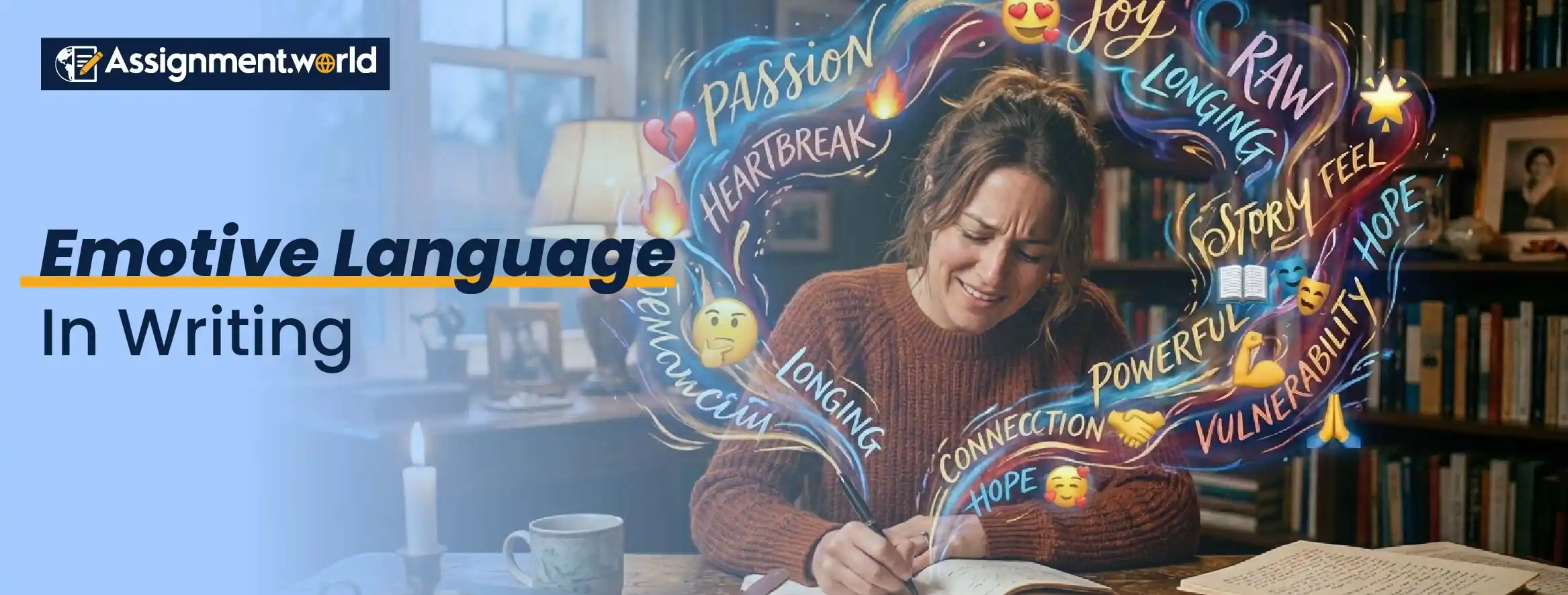
Emotive language refers to the purposeful use of words and phrases that activate emotional responses. Rather than sounding flat or mechanical, your writing can become more engaging and persuasive. When you use it carefully, imaginative language allows you to focus on the significance, express your viewpoints clearly, and impact how ideas are interpreted.
In academic writing, emotive language does not mean overstatement or an informal letter; it means choosing words that convey meaning, urgency, or empathy with clarity and without compromise. This balance helps you to sound confident, thoughtful, and conventional.
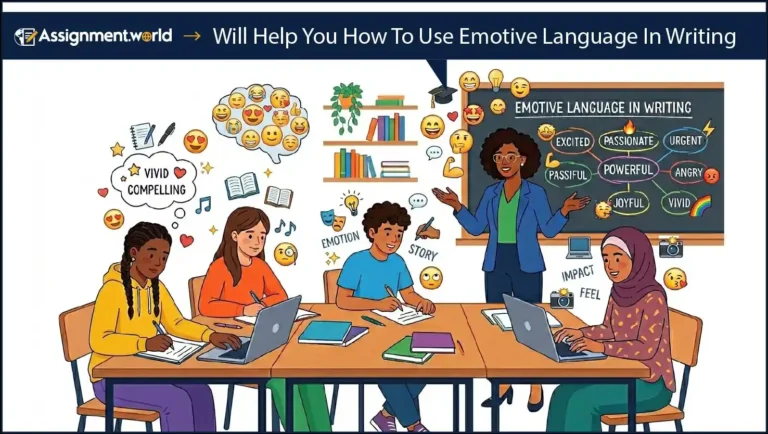
When you write essays, reports, or reflective pieces, your goal is not only to define but also to pursue. Your examiners respond better to writing that shows depth awareness and critical thinking. Knowing how to use emotive language in writing becomes necessary here because it allows you to:
Emphasise the significance.
Strengthening your arguments.
Preserving the audience's interest.
Show analytical maturity.
For example, if you want to write "the problem is concerning," it might feel neutral. However, writing "the problems increase serious ethical concerns" can convey the emotional weight without being academic.
Applying emotive language effectively requires thoughtful word choice and clear intent. When you apply emotion with control, your writing becomes more engaging and persuasive without losing its academic tone.
Identify the key message in each paragraph and apply emotive words only to the central idea.
Apply the cause-and-effect phrasing to emotionally link actions with outcomes.
Use contrasting phrases by combining positive and negative words to point out the differences.
Revise sentences by focusing on how you want the audience to feel. Do you want them to be concerned, persuaded, or reflective?
If you want to improve your writing skills with the emotive language, then you can follow these key features:
Select Strong Verbs and Adjectives: Using weak verbs weakens meaning, while strong verbs can make your ideas stand out. Rather than using verbs like "shows", you need to use words like "reveals" or "exposes". In contrast to words like "bad", you can use "harmful" or "damaging". These simple details are one of the easiest ways to improve writing with emotive language while maintaining a formal tone.
Use Sensory and Descriptive Language Carefully: Descriptive language helps your examiners to visualise situations. While academic writing should remain controlled, brief description elements can enhance clarity and engagement. Avoid overuse, but allow moments of vivid expression where relevant.
Appeal To Shared Values: You can specifically point out fairness, responsibility, or impact on society. These key language features resonate emotionally and strengthen your argument. For example, writing sentences like "long-term consequences for future generations" adds emotional depth without losing academic credibility.
Understanding emotive language techniques helps you to apply them more strategically. Some of the most effective ones include:
Loaded words that point judgment.
Focusing on consequences and outcomes.
Contrast between positive and negative scenarios.
Rhetorical focus through tone.
Want one of our emotive language writing tips? Instead of "minor inconvenience", you can write "significant barrier to learning"; this can change how the professor is going to perceive the issue entirely.
One of the biggest challenges you are going to face is avoiding emotional overload. Academic writing still demands logic, backed up evidence, and structure. Using emotive language in writing needs to support your arguments and not replace them.
Hence, you always need to pair up emotional wording with a proper explanation or evidence. If you struggle to maintain this balance, then simply take the help of essay writing services, as they can do it professionally. This balance would show maturity and make sure that your writing remains persuasive rather than just being biased.
Using emotive language has many benefits that you might not know. Emotive language lets you:
Emotive language lets you strengthen emotional well-being. You can foster emotional growth through the choices of your words. You can use it in a poem or novel analysis to convey the emotions of the author.
It helps in understanding past experiences. You can reflect on a particular experience and feelings through this action. Perhaps it can be used in reflection practices where personal experiences are highly valued.
It helps to connect with the characters of the work. If you are working on any novel or particular literature analysis, then you can briefly explain all the characters, their depth, and situations, along with their feelings.
One of the greatest benefits of emotive language in writing is that it helps you in persuasion as well. For example, if it is a marketing assignment, you can properly explain the targeted audience and their feelings towards the campaign or product.
If you want consistent improvement, then follow these tips:
Use the active voice over the passive voice. It improves the emotional appeal in your writing by focusing on the action.
Use sensory language to trigger particular emotions in the writing. You can portray vivid images and build a connection with the audience this way.
Add similes, metaphors, or symbols in your writing. These strong tools let you be more emotive and engaging.
You can use personal experiences in your writing to resonate with emotions. Write like you are telling a story, and the difficult challenges you have come over.
Opt for emotive objectives to demand attention and portray strong emotional reactions. Using adjectives such as "breathtaking" leaves an impact on the audience's mind.
Focus on the tone of your writing. With your writing tone, you can simply imply what kind of feeling you are portraying. Ensure that the tone reflects the mood of the situation you are speaking of.
You can add humour in your writing as well to convey emotions. Most modern writers are using humour in their writing to engage with the audience while spitting out the facts right to the point.
Mastering emotive language is about control and not going overboard with words. When you learn to express your ideas with clarity and emotional awareness while applying the correct emotive language writing tips, your writing becomes more persuasive and engaging. From essays to reflections, emotive language lets you have an impact without losing academic integrity.
If you want to have your emotive language assignment done by professionals, then contact us. Assignment World has a wide range of assignment writers who are masters in writing emotive language. They can craft a paper that conveys messages with playful emotions and tone.