

235,715
Delivered orders

Learn how a distributed database is used with design, its benefits, and real-life examples that let you understand it.

distributed database is a modern solution that is developed for storing and handling data in different locations while
rogramming assignments are the tasks and projects which are assigned to the students. These assignments focus on the
A
distributed database is a modern solution
appearing as a single system to you. Rather than relying on the main server, data is distributed across multiple nodes, enhancing performance, scalability, and readability. As applications increase globally, this approach lets you access data faster and ensure systems stay available even during failures.
that is developed for storing and handling data in different locations while appearing as a single system to you. Rather than relying on the main server, data is distributed across multiple nodes, enhancing performance, scalability, and readability. As applications increase globally, this approach lets you access data faster and ensure systems stay available even during failures.
With this blog, we are going to learn about how a distributed database works, how it is different from centralised systems, its types, and design principles. Along with that, we are also going to cover the challenges and limitations that you need to know.

A distributed database is a collection of data that is logically related yet physically stored across different locations that are connected throughout a network. Even though the data is spread out, you connect with it as if it were stored in one place. This abstraction is managed by advanced software that makes sure there is consistency, collaboration, and security.
This system separates data into fragments and distributes them across different nodes. Each node can process queries locally, reducing the response time and network load. If you ask how a distributed database works, the answer would be that it coordinates transactions, synchronises updates, and guarantees data integrity.
Even if one node fails, the others would continue operating, which would allow you to access information without distraction. Replication and consensus protocols play a crucial role in handling accuracy across locations.
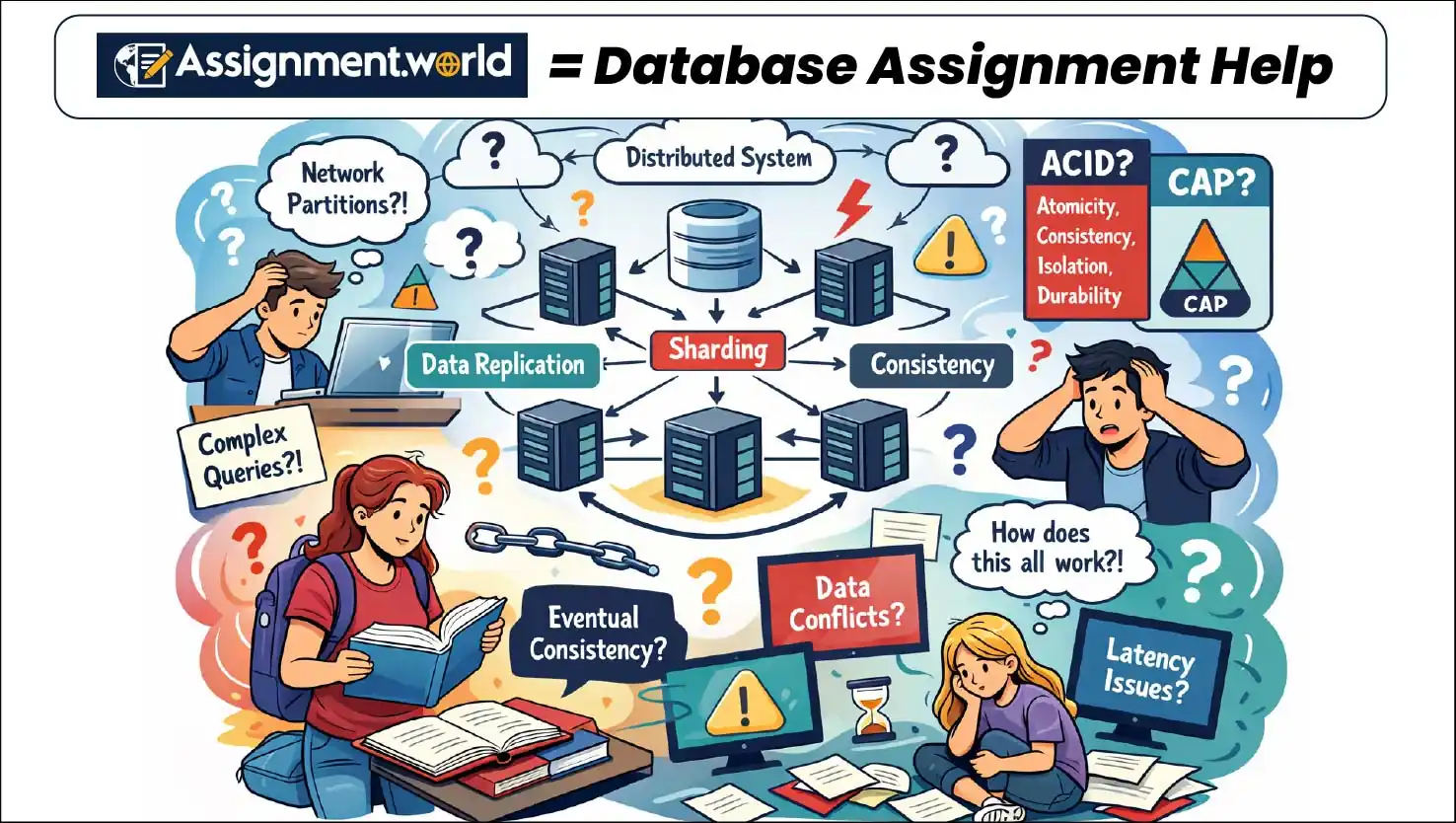
A distributed system consists of many core components that work together seamlessly. These include:
Data storage nodes.
A communication network.
Transaction managers.
Query processors.
Each of the components of distributed BDMS has a specific role in managing data requests efficiently. For you, this structure ensures that data operations feel smooth and reliable. The system decides where data should be stored, how queries should be rooted, and how conflicts are resolved, all without requiring any manual intervention.
The debate for distributed and centralised databases highlights key architectural differences. In the battle of distributed database vs centralised database, the centralised one stores all the data in one location, which makes management simpler; however, it creates a single point of failure.
On the other hand, the distributed ones spread data across numerous nodes, offering better fault tolerance and scalability. This means higher availability and faster access, especially when users are geographically dispersed. Yet, the comparison of distributed systems is more complicated to manage and design.
The power to make a distributed system was discovered in the 1980s. This process went on based on the different types of distributed system environments that are widely categorised as homogeneous and heterogeneous databases.
Homogeneous Database: This is one of the types of distributed databases where every site uses the same DBMS and operating system. This kind of environment works in a way where the structures are similar on all the sites. For example, operating systems, database management systems, and data structures. This environment further works under 2 sub-sections: autonomous and non-autonomous.
Heterogeneous Database: This is one of the types of distributed databases that can have many locations. For example, different data models, DBMS products, and operating systems. Many of its websites use different technologies and schemes. The system can have a large number of object-oriented, hierarchical networks or relational DBMS. There are two subgroups of heterogeneous - unfederated and federated.
Effective design focuses on data fragmentation, replication, and allocation.
Fragmentation can break data into smaller pieces.
Replication creates copies for reliability.
Allocation decides where the data should be stored.
A good distributed database design ensures minimal latency, efficient query processing, and high availability. However, having poor design can lead to inconsistencies and performance bottlenecks, which is why planning is a critical step in distributed systems.
A distributed system must manage transactions carefully to maintain consistency across nodes. Transactions may apply to multiple locations, making collaboration more complicated than the main systems.
Protocols such as two-phrase commit guarantee that all the nodes agree before finalising the changes. This ensures that you always see accurate and reliable data, even when different users access the system simultaneously.
In a distributed database, replication makes sure that copies of data exist throughout different nodes. This helps to enhance availability and fault tolerance, but introduces challenges in maintaining consistency.
Consistency models define how updates propagate through the system. For you, this determines whether you see the most recent data immediately or after a short delay. Balancing consistency and performance is key to a well-designed decision.
A distributed system has many benefits that make it ideal for modern applications.
Better Performance: Storing data geographically closer to the user to reduce latency and speed up access.
Data Locality: Keep the relative data in particular regions, optimising the local access for users.
Flexibility: Modular design allows adding or removing nodes without messing with the whole system.
High Availability and Fault Tolerance: Data replication across nodes ensures that the system stays up even if one node fails.
Disaster Recovery: Data redundancy is secure against site-wide failures.
Scalability: Easily adds more nodes to manage increasing data and traffic.
Although having many strong points, a distributed database comes with challenges and limitations.
Complications in designing management.
Balancing data consistency and integrity in multiple sites is difficult.
Network latency and performance may be disrupted.
Increase security risks due to multiple access points.
High cost and resource usage.
Fault tolerance and failure recovery.
Managing heterogeneity and integration can be time-consuming.
For you to understand these limitations is important for academic learning and practical application. And if you can not, then opt for an online assignment writer who can include this information. Distributive systems require careful planning, monitoring, and skilled administration to function effectively.
A distributed system is widely used in industries like E-Commerce, finance, healthcare, and cloud services. Online platforms rely on a distributed system to handle millions of users simultaneously. For example, multinational companies use distributed systems to ensure fast access regardless of location. This real-world relevance makes the topic important for both your studies and your future career.
Learning about distributed systems requires you to have knowledge that aligns with modern computing trends. Assistance has become more transnational, and data-driven distributed architectures are becoming the standard. Understanding these concepts is going to allow you to perform better in DBMS assignments, technical interviews, and real-world projects where scalability and reliability are vital.
A Distributed DBMS plays a vital role in modern data management by offering scalability, reliability, and performance that the main system struggles to achieve. When you understand how it works, its design, principles, advantages, and challenges, you can develop a strong foundation in distributed computing concepts.
Writing your database assignment may be tough, and you want to rely on someone for that. That is why Assignment World offers database management assignment help for you. Now, leave all the complicated research and writing to us without any doubt.